Blog Post
Written by Ben Larson, CEO, Vertosa
What THC beverage businesses should be doing while we fight to keep the category alive
I’m still optimistic that we can secure a lifeline for hemp beverages (and no, we’re not opening the whole can of worms about broader hemp today). We’ve made real progress in Washington, we have people working incredibly hard on our behalf, and more members of Congress understand what’s at stake than knew about the category just a year ago.
I’m also concerned that a lot of businesses haven’t prepared for what happens if we fall short.
Our good friend Seth Yakatan joined us for Episode 159 of High Spirits, and we talked about preparing for the worst while hoping for the best. That feels particularly relevant right now, although “hoping” undersells the amount of work going into keeping these products available.
I can’t decide whether there’s too much “hopium” in the air or just a lack of understanding about what the redefinition of hemp or operating in a state-legal system actually means. Probably a bit of both. If you entered this industry through hemp, especially from beverage alcohol or traditional retail, there are good reasons you might not appreciate everything that comes with operating a federally illegal cannabis business. Why would you? That wasn’t the business you signed up for.
Those of us who have been doing this for a while have a somewhat uncomfortable advantage. We’ve dealt with the banking problems, the taxes, the service providers that suddenly drop you, and the state-by-state supply chains. Hearing these conversations again brings back a lot of feelings.
So I want to work through where we are, what I think we can accomplish, and what you should be discussing with your team now. This is written primarily for hemp beverage businesses and their partners. The medical and adult-use marijuana industries are looking at this moment differently, and unfortunately, what some operators consider a win may not be what’s best for broader cannabis access.
The policy discussion reflects the landscape as of October 27, 2026. The business lessons come from our experience. Please work through the legal and tax questions with advisors who understand your particular situation.
What we’re hoping for
Last year’s funding legislation narrowed the federal definition of hemp and established a 365-day implementation period. The new restrictions include a 0.4-milligram-per-container limit on covered finished cannabinoid products, but also implemented a total THC definition of 0.3% THC with no acknowledgement of a work-in-progress concentration allowance, which would remove the federal hemp pathway for essentially the entire hemp cannabinoid industry as we know it. Congressional Research Service explains the changes here.
After months of advocacy, the industry secured an extension moving the main deadline from November 12 to December 11, aligning it with the federal funding calendar.
November 12 still matters, though. The exclusion covering cannabinoids incapable of being naturally produced by the cannabis plant remains on the original timeline (e.g. THCP). If you have questions about your ingredients or how they’re manufactured, have counsel review them. People use the word “synthetic” pretty loosely, and the details matter. Foley Hoag has a useful explanation of the two dates.
The extension gives us a chance to get past the midterms and into the larger discussion about federal funding for 2027. I do appreciate the irony of trying to save the industry through the same legislative process that threatens to kill it.
But we still need a solution.
It’s been an incredibly busy year of educating congressional offices about cannabinoids, hemp versus marijuana, and beverages specifically. After decades of cannabis advocacy, we’re still explaining the basics to people who will decide whether these businesses can continue operating. Staff changes, priorities shift, elections happen, and you find yourself having the same conversation again. It’s frustrating, but that’s the work.
After two years of asking for low-dose hemp beverages to be regulated like alcohol, we have two bills that attempt to do just that. The Van Duyne–Landsman Beverage Regulatory Parity Act and the Barr–Craig Lawful Hemp Protection Act give Congress proposals that create an even playing field with the alcohol industry and address their public safety concerns. My expectation is that elements of these bills could inform narrower bridge legislation, with immediate requirements and enough time to finish a longer-term regulatory framework.
That’s my expectation. We don’t have that agreement yet.
During our Q3 Vertosa Unfiltered AUA, Diana Eberlein explained why the industry needs more than another deadline. Businesses need to know what they’re working toward, and Congress needs confidence that extending access comes with meaningful and enforceable rules.
Age restrictions, independent testing, clear labels, restrictions on marketing to minors, no copycat packaging, and workable ingredient and dosage standards are all things we should be supporting. Many of us have been asking for them for years.
Why I’m pushing for a narrow solution
I don’t see Congress suddenly resolving every cannabis issue in this funding negotiation. I think we have a better chance of preserving something specific that lawmakers understand and feel comfortable explaining to their constituents.
Beverage gives us that opportunity.
The jobs, farms, and revenue matter. Of course they do. But we’re competing for attention with much larger industries and national issues, so we can’t assume our economic impact will be enough. We need a proposal that addresses the concerns lawmakers keep raising, and partners who can help get it passed.
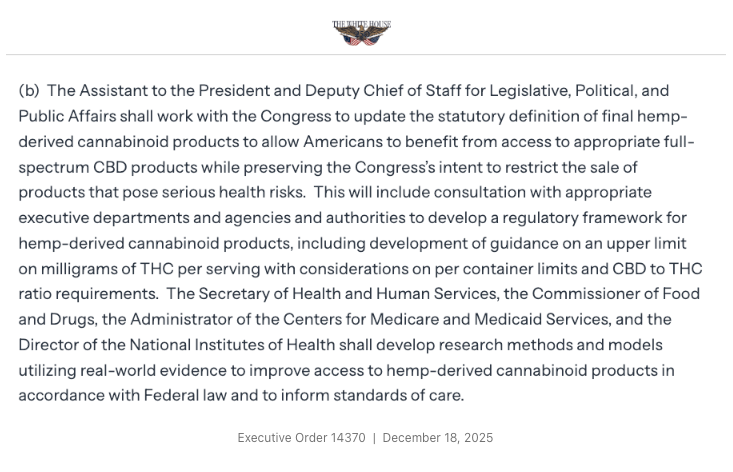
The beverage category brings in retailers and distributors who already operate in a heavily-regulated industry and handle age-restricted products. The administration’s interest in therapeutic cannabinoids gives Congress another reason to revisit the definition. Its executive order on medical marijuana and cannabidiol research calls for work on full-spectrum CBD access, and CMS has established a limited hemp-product access initiative. Neither guarantees that beverages will be protected, but both are relevant to the conversation.
There’s still a lot we don’t know. What will the midterm results do to the negotiations? Will Congress be willing to work together during the lame-duck session? What will the White House prioritize, and how much influence will it have?
Our outcome could depend on arguments that have nothing to do with our industry.
Diana recently joked that her crystal ball is in the shop. Her post about the questions she’s getting is worth reading, especially if someone has been telling you with complete confidence what will happen in December.
What I am confident about is the value of keeping low-dose beverages available where other adult beverages are sold and served. I wrote about their potential to pave the way for legalization a couple of years ago, and I feel even more strongly about it today.
People who would never have walked into a dispensary are trying cannabis in a format they understand. They’re seeing these products at stores they already shop in and ordering them in social settings where they feel comfortable. That changes how people think about the plant.
I have a hard time watching cannabis operators celebrate the possibility of that going away.
I understand their frustration with unequal rules. We’ve operated in regulated cannabis for years. The taxes, licensing costs, capital constraints, and restrictions on where you can sell are brutal. Those businesses deserve relief.
But I want US Cannabis Roundtable, American Trade Association for Cannabis and Hemp (ATACH), and operators pushing to restrict these channels to explain how removing responsible adult access helps us get to broader legalization. I worry that a commercial victory for some companies will leave all of us with fewer consumers, fewer allies, and more entrenched opposition.
Wouldn’t the better approach be protecting access and then harmonizing supply chains?
Medical rescheduling is meaningful progress. But we still haven’t seen the benefit applied to Adult Use, let alone achieved broad federal legalization, and I don’t want to spend another decade arguing over who gets to sell the plant while most of the opportunities to normalize it remain out of reach.
What to do if the federal fix doesn’t happen
One moment from our AUA really stood out to me. Michael Finkbeiner said some people are planning, while “most people are hoping someone else will figure it out.”
I suspect a few people recognized themselves in that.
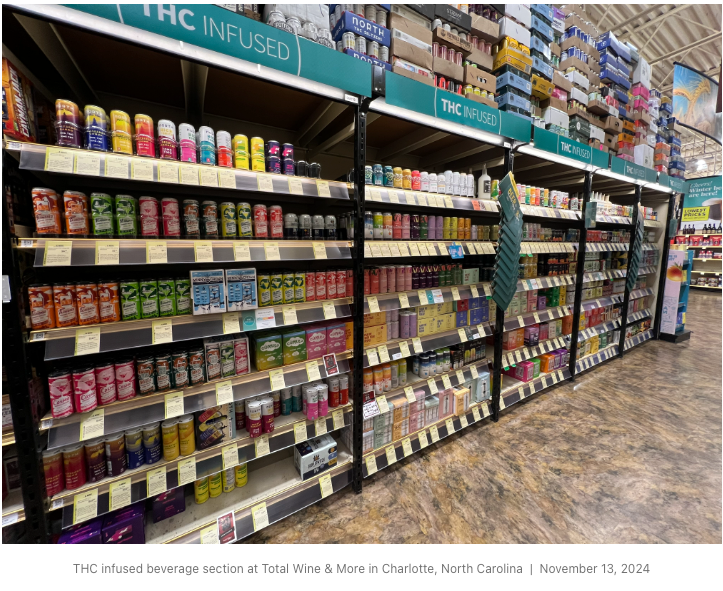
If nothing further changes, the current hemp THC beverage business cannot simply continue as it has. Some companies may find a workable state pathway while accepting significant federal risk. Some may enter licensed marijuana markets. Others will pause or wind down. The industry is already feeling the pressure as the deadline approaches.
You need to know which of those options is realistic for you, and what it would cost. Here’s where I’d start.
1. Find out whether your state can support your whole business
A statement from a supportive state agency is encouraging. It’s also only one part of the answer.
You need to understand what the legislature has authorized, how the relevant agencies interpret it, and whether their positions line up. Then you need to establish whether your manufacturers, warehouses, distributors, retailers, insurers, and banks are willing to participate.
That takes a lot of phone calls.
Ask counsel to walk through each activity: manufacturing, possession, storage, transportation, sale, and payment. Who is authorized to do what? What licenses are required? What remains unresolved?
Then ask your partners whether they intend to keep doing business with you under those conditions. An alcohol wholesaler might love the category and still decide that continuing isn’t worth the risk to the rest of its business. A retailer might have the state’s permission and lose its processor.
State authorization doesn’t remove federal exposure, either. People sometimes refer to the Cole Memo as if it still provides protection, but DOJ rescinded that guidance in 2018. A history of limited enforcement should not be treated as a promise about what happens next.
And if your plan is to move inventory into dispensaries, check that now. Existing hemp products don’t automatically qualify for a licensed marijuana supply chain. Sourcing, testing, tracking, packaging, and licensing requirements may all get in the way.
2. Have someone explain 280E using your actual numbers
If you’ve never dealt with 280E, I’m sorry to be the one introducing you.
Section 280E denies ordinary business deductions and credits to businesses trafficking in Schedule I or II controlled substances. Properly calculated cost of goods sold can still reduce gross receipts, but many of the expenses you normally deduct may no longer be deductible. The Taxpayer Advocate Service explains the mechanics here.
Here’s a simplified example. You sell $1 million of product, have $600,000 in allowable cost of goods sold, and spend another $350,000 running the business. You’ve made $50,000 before tax. If those operating deductions are denied, your federal taxable-income calculation could instead start at $400,000.
You can see how quickly this becomes a problem.
When Nick Richards joined High Spirits, we discussed the implications for businesses selling THC alongside beer, wine, food, and other products. You cannot assume the exposure is minor just because THC is a small percentage of revenue. Whether you have genuinely separate business activities, and how you allocate shared expenses, can matter considerably.

Get a cannabis-experienced CPA and tax attorney involved. Have them model your business under the downside scenario, including the effect on cash flow. Manufacturers and retailers have different cost-of-goods rules, so advice that worked for someone else may not apply to you.
There are ongoing challenges to 280E and arguments about when it should apply. Those are worth following with your advisors. I wouldn’t base the survival of a business on a favorable outcome.
The Schedule III discussion also needs to be kept in context. The April action covers FDA-approved marijuana products and state-licensed medical marijuana. The broader proceeding remains unresolved as of this writing; it does not currently give hemp beverages or adult-use sales blanket Schedule III treatment. Vicente explains the distinction here.
3. Call your bank and your payment processor separately
A bank willing to hold your money and a processor willing to handle your sales are two different things.
Some financial institutions serve marijuana businesses under enhanced compliance programs. Federal illegality does not mean every bank transfer is categorically unavailable, although the risks and requirements limit the institutions willing to participate. FinCEN’s guidance describes the diligence and reporting involved.
We use Bridge Bank, part of Western Alliance (thanks, Randall Lee!). That may be a useful introduction for some businesses, but our relationship doesn’t tell you whether they’ll approve yours. Be specific about the activities you want a bank to support, particularly if your product’s federal classification changes.
Ask about deposits, ACH, wires, payroll, fees, reserves, and what could cause the account to be closed. Get the answers in writing. Have a backup.
Your processor needs a similar conversation. Don’t assume that having a bank account means you can continue running THC purchases through the same card terminal.
We’re already seeing the disruption: Square has directed sellers to remove hemp and CBD products, and Minnesota breweries have reported moving THC sales to cash or ending them. Private companies can make decisions well before a law takes effect.
Be careful with anyone offering a workaround that requires disguising what you sell. If cash becomes part of your plan, account for security, reconciliation, insurance, and reporting. Accepting cash doesn’t fix a problem with the underlying sale.
4. Check the services you usually take for granted
We’ve been kicked off HR platforms, had problems with payroll and accounting services, and been denied by Ramp after being aggressively pursued. It’s frustrating to spend time explaining your business to a company that wanted your business, only to find out that someone elsewhere in the organization has decided you’re ineligible.
You don’t want to discover that on payroll day.
Call your payroll provider, insurer, accounting platform, shipping partners, warehouse, lender, and landlord. Explain what could change and ask whether they’ll continue supporting you.
For insurance, have your broker review the actual coverage and exclusions. An assurance that they “work with hemp companies” doesn’t answer what happens if your products lose their federal hemp status.
Know the notice periods, keep accessible copies of your records, and identify alternatives. It’s tedious work. It’s much easier to do before something stops working.
5. Review how the business is structured
Depending on what you do and where you do it, your advisors may recommend separate entities, books, bank accounts, premises, equipment, or staffing arrangements. Shared expenses may need careful documentation and allocation.
We’ve generally taken a conservative approach, but you need a structure suited to your activities. A separate C-corp alone won’t resolve every issue, particularly if the businesses still operate as one.
Work with experienced regulatory counsel, such as the teams at Husch Blackwell or Vicente LLP, and bring your tax advisors into the same discussion. You want them looking at the same facts.
For decisions with significant consequences, get the legal analysis in writing. Ask what assumptions it relies on and where the uncertainty remains. Sometimes a second opinion is worth the money.
I realize that recommending more professional fees is not especially welcome right now. Having to unwind a bad arrangement later is worse.
6. Understand what happens before the THC reaches the can
This is one of the biggest gaps I see in the conversation.
A state may want finished beverages to remain available, but those beverages require ingredients. The ingredients may be produced elsewhere, at concentrations that create their own legal problems.
The new federal definition excludes intermediate hemp-derived cannabinoid products above the applicable 0.3% combined THC and similar-effect cannabinoid threshold. That has serious implications for concentrates and emulsions. A state allowance for work-in-progress material does not itself provide a federal exemption or authorize interstate shipment. CRS addresses the intermediate-product restrictions here.
Trace your supply chain from cultivation through extraction, concentration, emulsion production, beverage manufacturing, storage, distribution, and retail. Where does each step happen? Who is licensed to perform it? What is the material’s legal status when it changes hands?
If your future depends on production within a single state, does that state have the inputs, equipment, testing, and capacity you need?
At Vertosa, our experience in regulated cannabis helps us evaluate these questions. We’ve built operations around the limits of state markets before. But that doesn’t mean every prospective hemp market has the infrastructure to keep going.
Buying ingredients before the deadline also doesn’t automatically preserve the right to possess, use, or sell them afterward. Have counsel review the treatment of existing inventory before making a large purchase.
And please keep asking questions about quality. We use chain-of-custody validation, COA reviews, stringent quality requirements, and redundant testing because we’ve seen how willing some people are to push the rules.
Retailers should work with trusted wholesalers and knowledgeable buyers. Ask who makes the ingredients, who manufactures the finished product, and how it is tested.
Distributors need a consistent process for vetting brands. You should be able to identify the ingredient supplier and explain the quality controls behind the products you carry. If a brand can’t provide that information, keep asking.
7. Decide when you would pause or stop
This is probably the least enjoyable conversation on the list, but it needs to happen while you still have options.
Build a cash forecast that includes slower orders, returns, inventory you can’t sell, payment holds, professional fees, and the cost of pausing or winding down. Agree with your partners on final order dates, production cutoffs, ownership of inventory, returns, and any permitted disposition of unsold products.
Don’t assume there will be a sell-through period.
Set decision dates early enough to act on them, and make someone responsible for each decision. What would need to be true for you to continue? How long could you afford to pause? When would the cost of waiting become too high?
Some businesses will conclude that continuing under these conditions isn’t worth it. I respect that. The risks may be very different from those you accepted when you entered the category.
What concerns me is waiting until a service provider, customer, or bank makes the decision for you.
8. Talk to your suppliers about what happens if we succeed
Ryan Pinsky made a good point during the AUA: a last-minute regulatory win could leave everyone trying to replenish inventory at the same time.
The industry has spent months managing uncertainty and pulling back on commitments. If we get the bridge, brands may all need ingredients, cans, cartons, and manufacturing time at once. Suppliers won’t necessarily be able to meet that demand immediately.
Share your upside forecast along with your downside forecast. Ask about lead times and capacity, and discuss commitments that give both parties some flexibility. Know what it would take to restart or reformulate under whatever requirements pass.
We’ve been asking our own partners what would happen if we needed several times our largest order. I’d much rather learn about the limitations now, when we have a chance to work on them.
Please keep pushing
After working through all of that, you might feel less enthusiastic about the business. I understand. Much of it is the same baggage licensed cannabis operators have been carrying for years.
It’s also why I’m spending so much time fighting for federal regulation. I want responsible companies to be able to serve adults without having every routine business function become a special project.
And there are things you can do that are helping.
In her recent post, Diana addressed whether letters to Congress matter. She admitted she used to roll her eyes at these campaigns before getting involved in advocacy. Now she hears directly from congressional offices that constituent outreach affects whether they prioritize the issue.
Some offices say they aren’t hearing enough. Others say they’ve heard more about hemp recently than at any point since 2018. She’s been in meetings where staffers named specific companies and individuals whose outreach got their attention.
So write. Call. Ask your customers and partners to participate. Be honest. Be respectful.
Explain what your business does, who buys your products, what safeguards you support, and what losing the category would mean locally. Ask your representative and senators to support a bridge to responsible federal regulation.
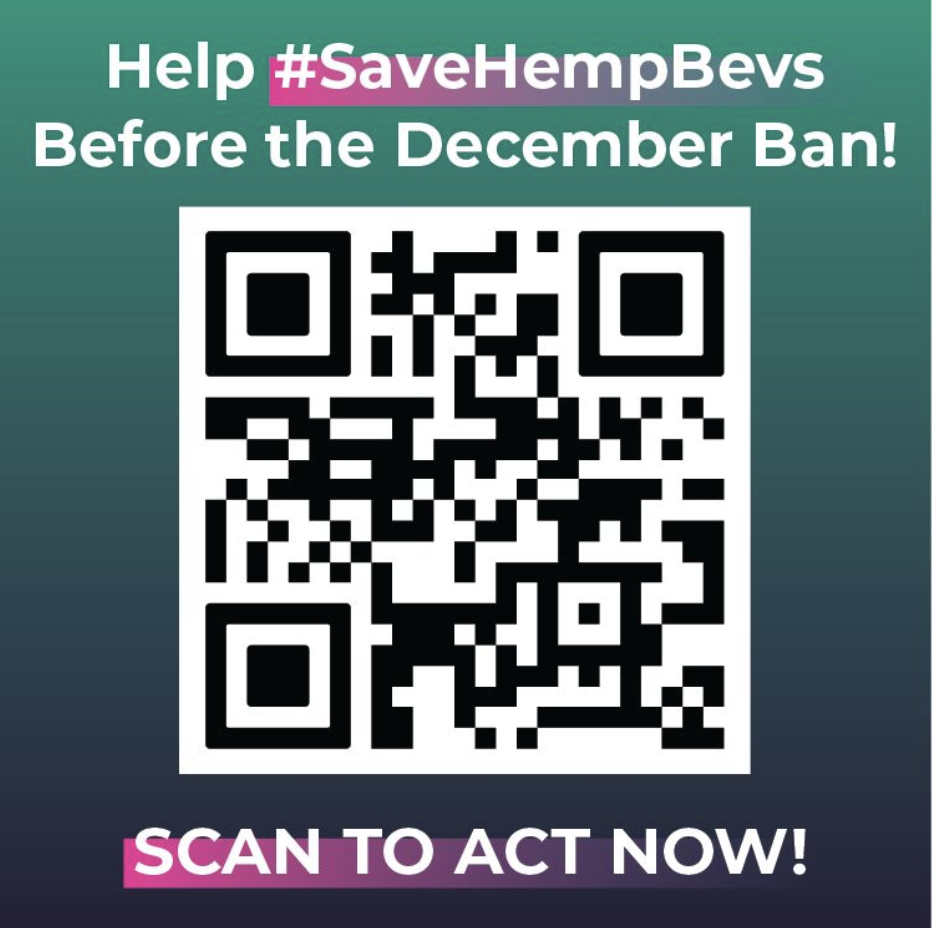
The Save Hemp Beverages campaign has materials you can put in stores, emails, and social posts. Use them. Support the associations doing the ongoing work and the lawmakers willing to help.
Diana also has CABA resources on regulatory maps, proposed excise taxes, beverage performance, and the relationship between low-dose beverages and dispensary sales. Contact her directly if those would help your conversations.
I believe cannabis is inevitable. I also know that doesn’t tell us whether your business can pay its bills in January. We have to be willing to talk about both.
If the law carries forward without a fix, prepare for a substantially harder business or an orderly wind-down. Keep advocating while you do that planning. Your customers may have no idea that the drink they’ve come to enjoy could disappear, and they deserve the opportunity to speak up.
What keeps me motivated is seeing how much has already changed. THC beverages are on liquor-store shelves, restaurant menus, and at concerts and sporting events. People are getting comfortable with cannabis in a way that many of us spent years hoping they would.
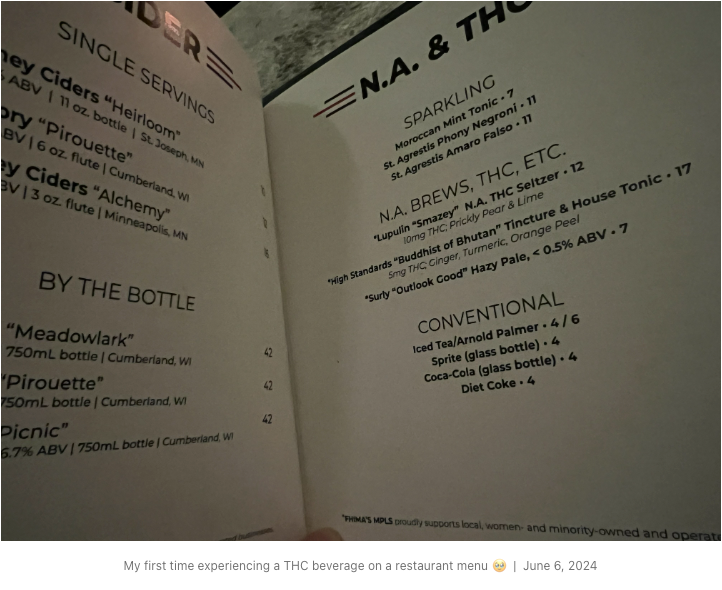
I don’t want to lose that. And I hope my colleagues in regulated cannabis will think carefully about what they’re supporting before treating its disappearance as a victory.
We’re here, and we’re not going anywhere. Reach out if you need help working through your options. We’ll share what we know, be honest about what we don’t, and help you find the people who can answer the remaining questions.
There’s still time to influence this outcome. Let’s use it.